

MENU
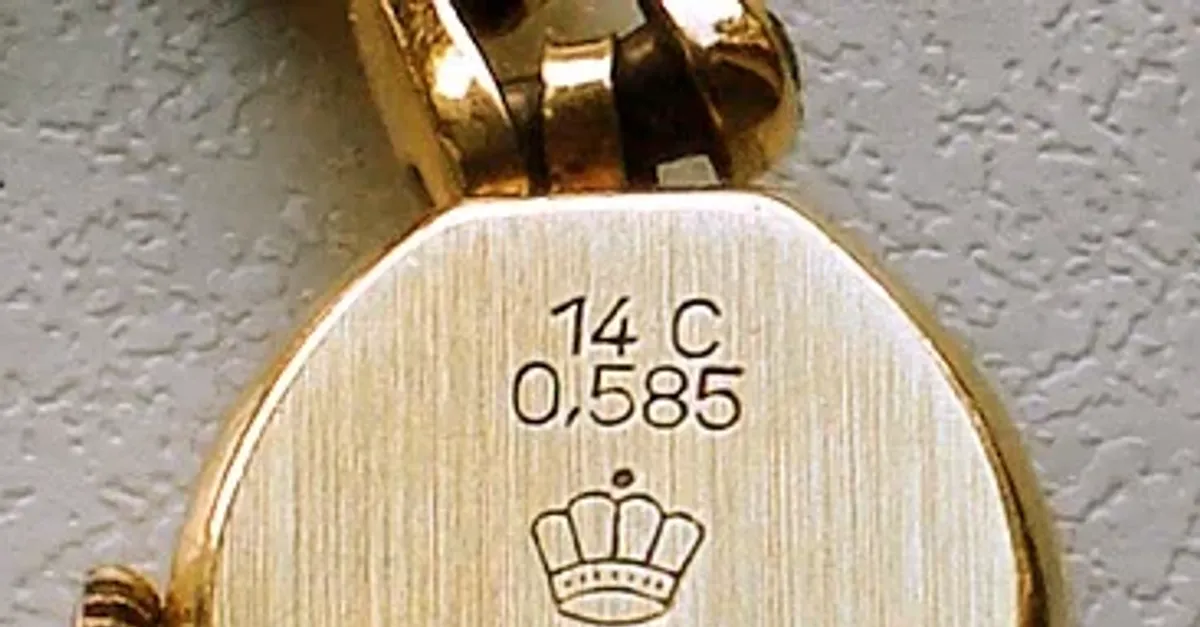
Flip over a gold ring or chain and you might spot a tiny "585" impression on the inside. While easy to overlook, that three-digit hallmark carries a precise message about purity, value, and even country of origin.
This guide breaks down exactly what the 585 stamp means, how it equates to 14-karat gold, where you’re likely to see it, and how the mark influences testing, pricing, and resale decisions.
Hallmarks are small, regulated marks added by manufacturers or assay offices to indicate precious-metal content. They help buyers avoid guesswork and give sellers a standardized way to describe quality.
In most countries, gold purity is expressed either in parts per thousand, the millesimal system, or in karats. The 585 mark belongs to the millesimal system.
A 585 stamp tells you the metal is 585 parts gold out of 1,000, or 58.5% pure. The remaining 41.5% is an alloy mix, usually copper, silver, zinc, or nickel, to add hardness and change color.
Because pure gold, 24K, is soft, most jewelry is alloyed. At 58.5% purity, 585 gold strikes a balance between durability and the rich look buyers want.
If you’re more familiar with karats, 14K is the direct equivalent of 585: 14 parts gold, 10 parts alloy, totaling 24 parts. Multiply 14 ÷ 24 and you get 0.583, rounded up to 0.585 in the metric system.
So whether a ring reads “14K” or “585,” the purity is the same. European and many Asian manufacturers prefer the numeric 585 mark, while North American pieces often carry the 14K stamp.
You’ll most often see the stamp on the inner band of rings, the clasp tags of chains, bracelets, and occasionally on small watch components.
Countries such as Italy, Germany, and Russia have long used millesimal fineness marks; imported jewelry from these regions frequently bears 585 rather than 14K.
Because 585 gold is 58.5% pure, its intrinsic or "melt" value tracks 58.5% of the spot price of 24K gold by weight. If gold trades at $2,000 per troy ounce, one ounce of 585 gold has about $1,170 worth of fine gold.
Market premiums or discounts then apply for craftsmanship, brand reputation, and condition. Designer 585 pieces can sell well above melt, while scrap buyers typically pay 70-90% of intrinsic value after refining fees.
Even with a hallmark, verification protects both buyer and seller. Common methods include acid scratch tests, electronic conductivity meters, and XRF spectrometers. Professional jewelers and pawnshops typically use at least two methods for accuracy.
If the piece is hollow or heavily plated, tests can reveal a lower core purity. A legitimate 585 item should consistently test between 57.5% and 59.5% gold.
For buyers, insist on a clear hallmark and ask if the seller provides assay certificates or return policies. When online, detailed photographs of the stamp and any accompanying paperwork add confidence.
Sellers should weigh pieces on a jeweler’s scale, know the day’s spot price, and get two or three offers, especially if selling to refineries or cash-for-gold operations. Clean, undamaged jewelry with recognizable brand marks nearly always earns a premium.
The tiny 585 stamp packs a lot of information: it equals 14-karat gold, signals 58.5% purity, and hints at European manufacture. Knowing this helps you spot genuine pieces, gauge value quickly, and negotiate from an informed position.
Whether you’re adding to a collection or planning to sell, recognizing and understanding the 585 hallmark ensures you treat the jewelry with the respect, and price, it deserves.

