

MENU
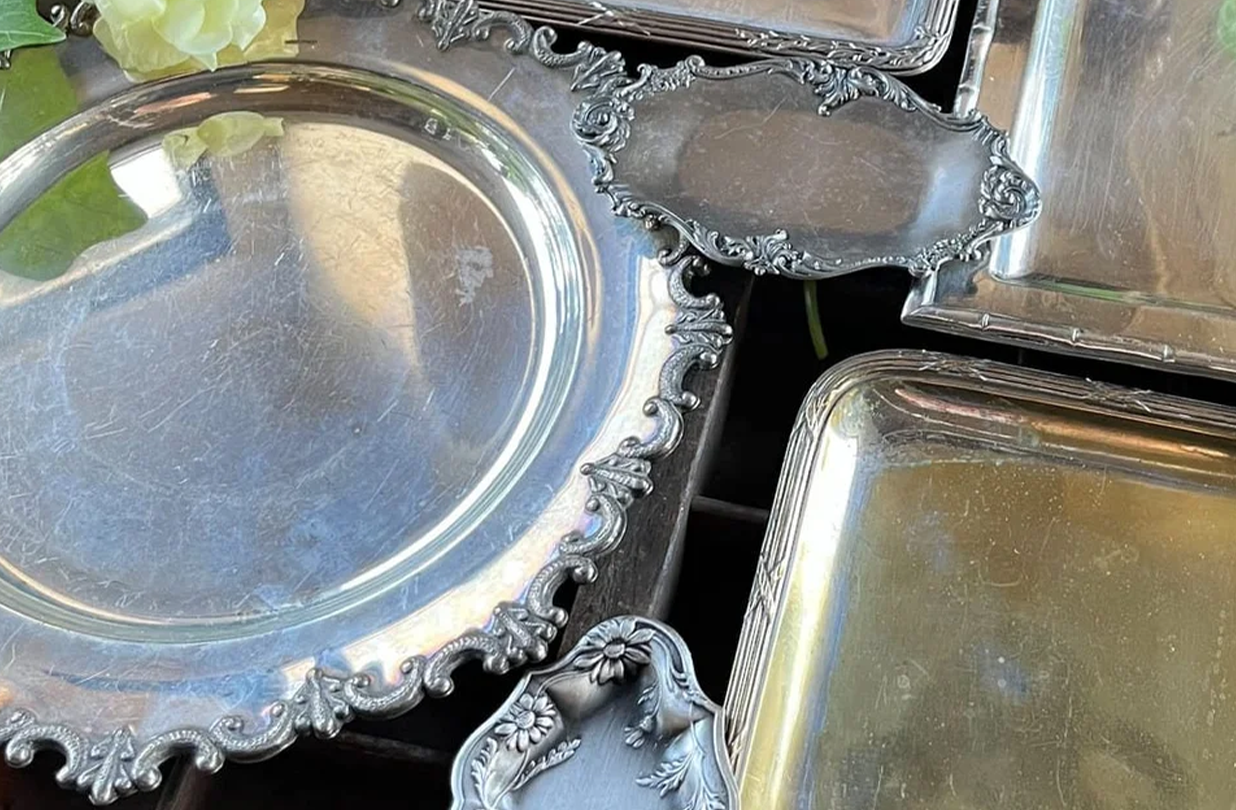
Silver trays are common decorative and functional objects found in homes, collections, and estates. At first glance, sterling silver trays and silver plated trays can look nearly identical. However, they differ significantly in material composition, value, durability, and long term use.
Understanding the differences between sterling silver and silver plated trays helps clarify what you own or what you are considering purchasing. These distinctions matter whether the tray is used for serving, display, or collecting.
A sterling silver tray is made primarily from silver. By definition, sterling silver contains 92.5 percent pure silver, with the remaining portion usually consisting of copper or another metal added for strength.
Because sterling silver is a solid metal alloy, the entire tray is silver throughout. This composition gives it inherent material value and contributes to its durability when properly cared for.
Sterling silver trays often have a noticeable weight and a softer luster that develops character over time.
A silver plated tray is made from a base metal such as copper, brass, or nickel that is coated with a thin layer of silver. The silver layer is applied through electroplating or a similar process.
The amount of silver used in plating is relatively small compared to sterling silver. As a result, the tray’s core material determines much of its structural strength.
Silver plated trays are generally lighter than sterling silver trays and are more common in decorative or casual serving settings.
The most important difference between these two types of trays is how much silver they contain. Sterling silver is silver based throughout, while silver plated trays only have silver on the surface.
This difference affects not only value but also how the tray wears over time. Sterling silver can be polished repeatedly without losing material thickness, while silver plating can wear down and expose the base metal underneath.
Material composition also influences how repairs and refinishing are handled.
Sterling silver trays tend to feel heavier and more substantial when handled. The density of silver contributes to this weight and often gives the tray a solid, balanced feel.
Silver plated trays usually feel lighter due to their base metal core. While some plated trays can still feel sturdy, they rarely match the heft of solid silver.
Weight alone is not definitive, but it is often one of the first noticeable differences when comparing the two side by side.
Sterling silver trays are typically marked with stamps that indicate silver purity. Common markings include “Sterling,” “925,” or similar indicators of silver content.
Silver plated trays may carry markings such as “EP,” “EPNS,” or “Silver Plate.” These markings identify the manufacturing process rather than the silver content.
Understanding these marks helps distinguish between the two, especially when visual differences are subtle.
Sterling silver trays are durable when properly maintained. Scratches and dents can often be repaired without compromising the tray’s material integrity.
Silver plated trays are more susceptible to visible wear. Over time, frequent use or aggressive polishing can thin the silver layer and reveal the base metal beneath.
Once plating wears through, restoring the surface usually requires replating rather than simple polishing.
Both types of trays require regular cleaning, but the approach differs slightly. Sterling silver can tolerate repeated polishing, though excessive polishing should still be avoided.
Silver plated trays need gentler care. Abrasive polishing can remove the thin silver layer and accelerate wear.
Storage also matters. Keeping either type in a dry environment helps reduce tarnish and surface damage.
Sterling silver trays generally hold higher intrinsic value because of their silver content. Their value is influenced by weight, craftsmanship, age, and condition.
Silver plated trays usually have lower material value. Their worth is often tied more to design, maker, and decorative appeal rather than metal content.
Collectors tend to prioritize sterling silver for long term value, while silver plated trays are often appreciated for aesthetics and practical use.
Sterling silver trays are commonly used for formal serving or display, especially in traditional settings. Their durability allows them to remain functional over long periods.
Silver plated trays are often used for decorative purposes or light serving. They provide the appearance of silver without the higher cost.
Choosing between the two often depends on intended use rather than appearance alone.
While sterling silver and silver plated trays can look similar, their differences become clear when considering composition, durability, care, and value. Sterling silver offers lasting material value and resilience, while silver plated trays provide a more accessible option with visual appeal.

