

MENU
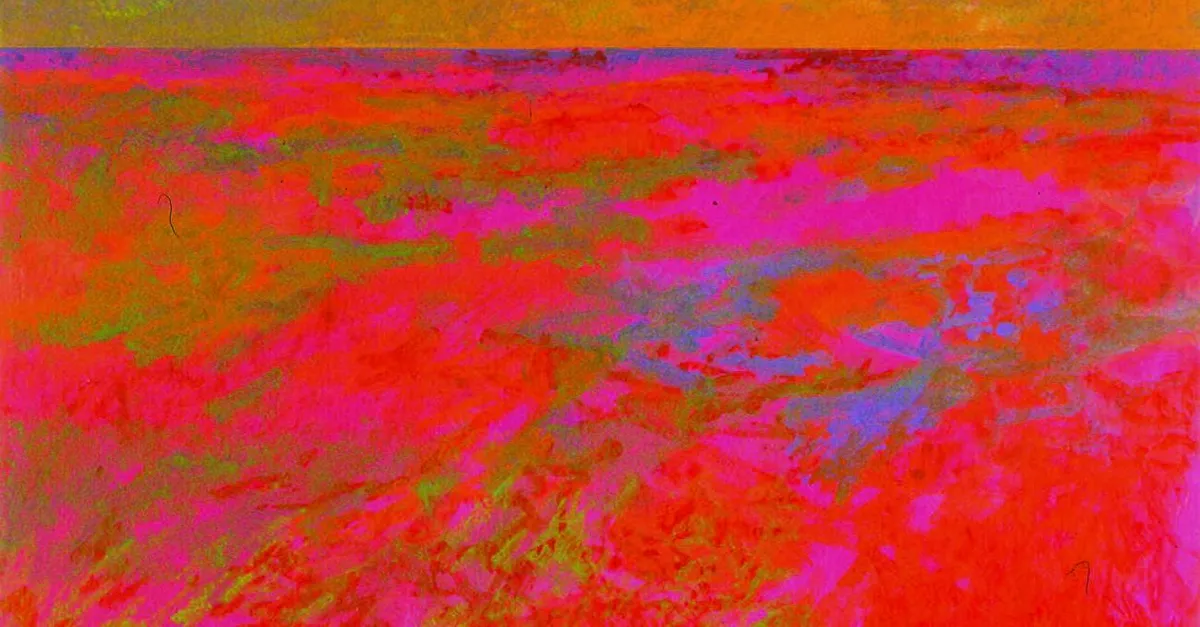
George Morrison (1919–2000) carved a singular path in American modernism. Born near Grand Portage, Minnesota, the Ojibwe painter merged Indigenous worldview with Abstract Expressionist energy, producing richly textured landscapes that continue to command critical and market attention.
This overview traces Morrison’s journey from reservation childhood to New York art circles, examines recurring themes, highlights key works, and outlines current trends affecting his market value.
Morrison grew up along Lake Superior’s North Shore, where the shoreline’s jagged geology later surfaced in his most famous horizon series. A childhood bout with tuberculosis led to long hospital stays, where drawing became both pastime and refuge.
After studying at the Minneapolis School of Art, he earned a scholarship to New York’s Art Students League in 1943. There he encountered the works of Arshile Gorky, Willem de Kooning, and other avant-garde figures who pushed him toward abstraction while he maintained ties to Ojibwe visual traditions.
Morrison’s art is instantly recognizable for its horizontal split between sky and land or water. Rather than literal vistas, these are emotional memories rendered through layered color, impasto, and hatched linework.
Another hallmark is his driftwood assemblage. Beginning in the 1960s, he scavenged Superior’s beaches, arranging weathered fragments into mosaic-like wall panels that blur sculpture and painting.
New York Years (1943–1954): Early canvases such as “Red Totem” reveal a loose gestural style aligned with Abstract Expressionism.
Mid-Century Explorations (1955–1970): Works like “Landscape, Lake Superior No. 1” introduce the iconic horizon motif, while the first driftwood pieces emerge at his Cape Cod studio.
Return to Minnesota (1970–2000): Back on Lake Superior, Morrison refined large panoramic paintings such as “Sun and River” and monumental wood panels including “Collage IX: Landscape.”
Morrison favored oil until the late 1960s, when health concerns prompted a shift to acrylics. He often mixed sand into pigment for a tactile surface mirroring shoreline grit.
For assemblages, he selected driftwood based on color and grain, then cut, sanded, and fitted each piece like tesserae, securing them with hidden nails before staining the entire work to unify tone.
While Morrison exhibited alongside mid-century peers, sustained recognition arrived later. Major retrospectives at the Minnesota Museum of American Art (1990) and the Smithsonian’s National Museum of the American Indian (2004) cemented his legacy.
Today his pieces reside in collections including the Whitney Museum of American Art, Walker Art Center, and the Minneapolis Institute of Art.
Prices for Morrison’s paintings rose steadily after 2010, with horizon canvases exceeding $300,000 at major auction houses. Driftwood assemblages, rarer on the secondary market, can surpass half a million depending on scale and provenance.
Factors influencing value include period (1960s works lead the market), exhibition history, and condition, driftwood panels require stable humidity to prevent warping.
Verify documentation. Provenance tracing back to Morrison’s studio or early gallery shows (Grand Central Moderns, Martha Jackson) adds credibility and value.
Inspect surface integrity; his textured layers can conceal craquelure or past restoration. A condition report from a conservator familiar with mixed-media Indigenous art is advisable.
George Morrison bridged cultural identities and artistic movements, forging a body of work that is both profoundly personal and universally resonant. His abstract landscapes invite viewers to experience place through memory and material, while his driftwood constructions honor the natural world that inspired him.
As interest in Indigenous modernists continues to expand, Morrison’s art stands at the forefront, rewarding both scholarly study and discerning collectors who recognize the depth behind each horizon.

