

MENU
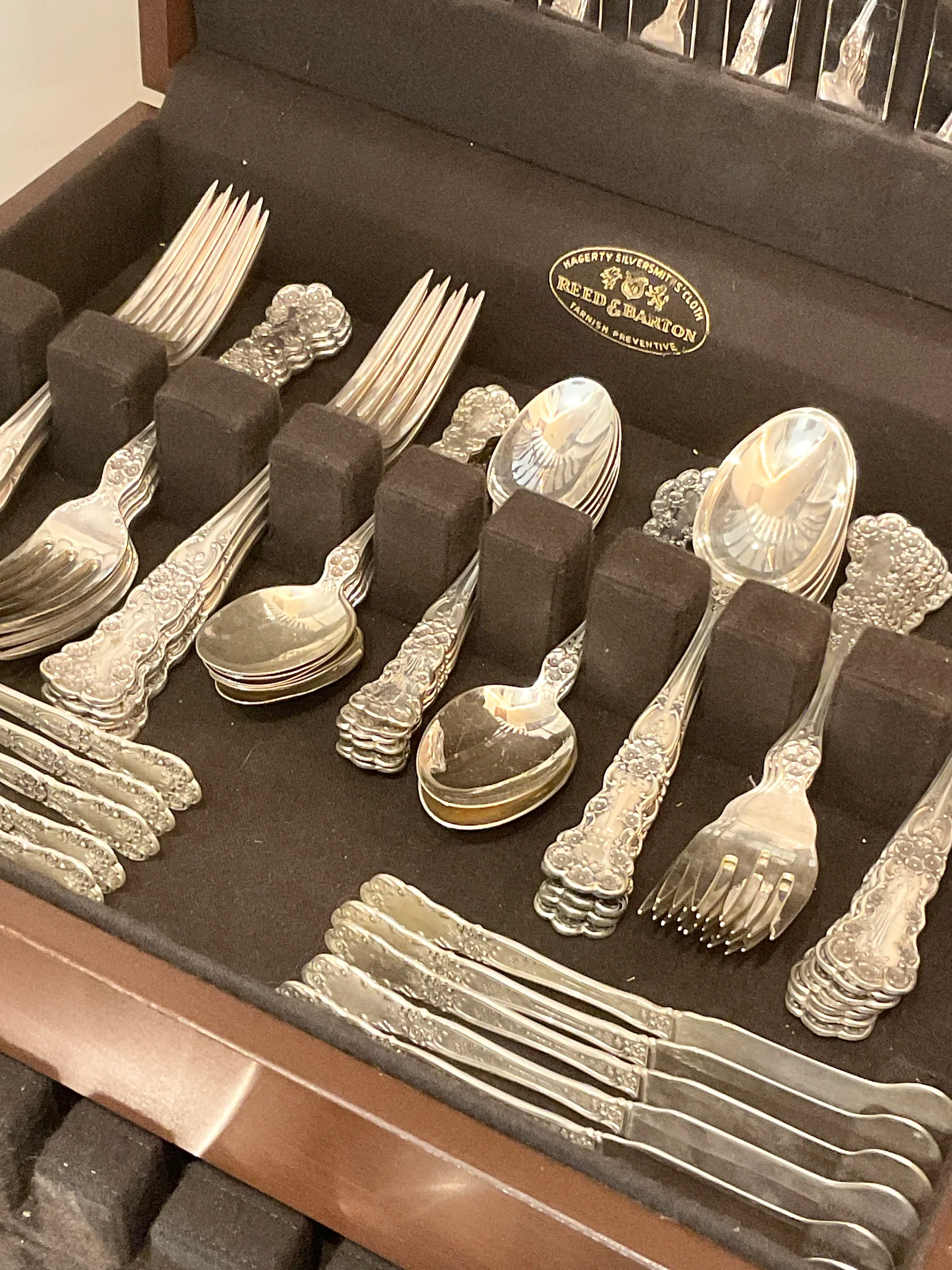
Gorham is a marquee name in American silver, and its flatware has graced dining tables since the 19th century. Because every piece is 92.5% pure silver, there is always an intrinsic melt value, but most sets trade well above scrap.
Exactly how much a Gorham sterling flatware set is worth depends on several moving parts: pattern popularity, total silver weight, completeness, and overall condition. This guide breaks down each factor so you can estimate what your set might bring in today’s market.
Dealers and auctioneers typically classify a "set" as any coordinated group of place settings plus serving pieces. The most common sizes are service for 4 (20–25 pieces), service for 8 (40–50 pieces), and service for 12 (60–80 pieces).
Because Gorham offered dozens of optional utensils, fish forks, demitasse spoons, steak knives, the exact piece count varies. More pieces usually equals higher value, but the pattern and weight still carry the most influence.
Like most antiques, supply and demand decide final prices. Even two sets weighing the same can differ by thousands of dollars if one pattern is hotter with collectors.
Below are the variables buyers weigh when placing bids or offers.
Certain patterns enjoy near-perennial demand, especially those introduced during Gorham’s "golden era" (1890s–1930s). Chantilly, Buttercup, Strasbourg, and Fairfax top most wish lists, while discontinued modernist lines like Etruscan or Circa 70 have smaller but passionate followings.
Because asking prices fluctuate with silver spot, the figures below reflect recent retail and auction results rather than fixed rules.
Every Gorham sterling utensil is stamped "Sterling" or "925," meaning 92.5% fine silver. Melt buyers pay strictly on weight; multiply total troy ounces by the day’s spot price (then deduct a refinery fee, often 5–10%).
Collector or user buyers, however, pay a premium for pattern, condition, and ready-to-use sets. That premium can range from 20% above melt for common patterns in rough shape to 300%+ for pristine, highly sought-after lines.
Surface scratches from normal dining are acceptable, but deep gouges, bent tines, or replacement knives can drag prices down quickly.
Monograms are another consideration. While many buyers happily live with an initial, others insist on "clean" silver and will pay more for it. Removing a monogram professionally costs money and can still leave tell-tale signs.
With silver hovering around $25 per troy ounce at the time of writing, melt value for a typical 12-place Gorham set (about 80 troy ounces of sterling) sits near $2,000 after refinery fees.
In practice, complete popular-pattern sets in good condition are selling between two and three times melt. Rarer patterns or exceptional provenance can push even higher.
For quick liquidity, local coin shops and precious-metal buyers pay close to melt, but you’ll leave collector premiums on the table.
Auction houses, reputable online marketplaces, and specialized silver dealers typically yield stronger prices, especially if you can provide exact weights, piece lists, and clear photos of hallmarks and condition.
Gorham sterling flatware always carries intrinsic value thanks to its high silver content, but the true worth of a set can be dramatically higher. Pattern demand, total weight, completeness, and condition work together to determine the final figure.
Whether you plan to appraise, insure, or sell, start by identifying the pattern and tallying the silver weight, then compare recent sales for similar sets. Armed with that data, you’ll know whether an offer is melt-level or a fair reflection of Gorham’s enduring appeal.

