

MENU
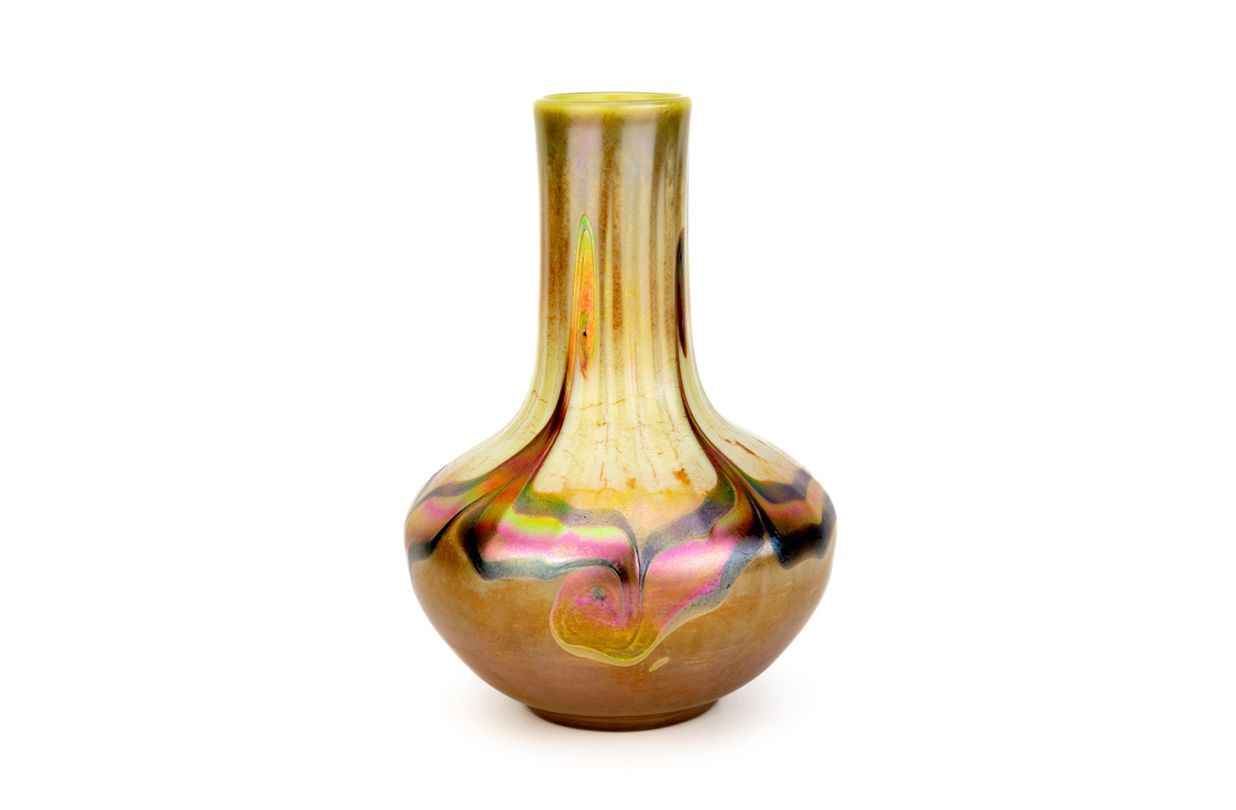
Favrile glass can range widely in value depending on the specific piece, its condition, and how confidently it can be attributed. Some examples sell for a few hundred dollars, while others reach well into five figures. There is no single price range that applies to all Favrile glass. Value is determined by a combination of physical characteristics, provenance, and market demand rather than age or appearance alone.
The most important factor in valuing Favrile glass is authenticity. True Favrile glass was developed by Louis Comfort Tiffany and produced using metallic oxides mixed directly into molten glass. Pieces that can be confidently attributed to this process generally command higher prices than later iridescent glass inspired by the style.
Beyond authenticity, value is shaped by form, color, craftsmanship, and overall condition. Even genuine Favrile pieces can vary significantly in price based on these details.
Smaller or simpler Favrile glass items such as modest vases, bowls, or decorative objects often fall in the low four figure range, and sometimes lower depending on condition and demand. Mid range pieces with strong iridescence, balanced forms, and desirable colors frequently sell in the several thousand dollar range.
Large, visually striking examples, particularly those with rare color palettes or complex surface treatments, can reach tens of thousands of dollars. Lampshades and exceptional sculptural forms are often among the highest valued categories.
Color plays a major role in valuation. Favrile glass with deep, layered coloration and a clear, even iridescent sheen is typically more desirable than pieces with muted or uneven finishes. Certain hues are more sought after than others, particularly when they shift noticeably under different lighting conditions.
Iridescence that appears integrated and subtle tends to be preferred over finishes that look overly metallic or harsh. Wear, dulling, or surface damage that disrupts the iridescent effect can significantly reduce value.
The shape and complexity of a piece strongly influence worth. Graceful forms, intentional asymmetry, and well proportioned silhouettes generally attract more interest. Unusual shapes or designs that demonstrate technical skill often command higher prices than standard forms.
Condition is critical when assessing Favrile glass. Chips, cracks, repairs, or heavy surface wear can reduce value substantially. Because the iridescence is part of the glass itself, improper cleaning or polishing can permanently alter the surface and diminish appeal.
Original condition with minimal wear is usually preferred. Professional restoration may stabilize a piece, but it rarely increases market value and can sometimes lower it depending on visibility and extent.
Many Favrile glass pieces are marked, but not all are. A clear, period appropriate signature or mark can support attribution and increase buyer confidence. However, absence of a mark does not automatically mean a piece is not authentic.
Unmarked pieces are often evaluated based on craftsmanship, color quality, glass composition, and comparison to documented examples. Provenance, when available, can also play a role in establishing credibility and value.
Favrile glass values are influenced by collector interest and broader market conditions. Demand can fluctuate based on trends in decorative arts collecting and availability of comparable pieces. High quality examples tend to hold interest more consistently, while more common forms may experience greater price variability.
Public sales results often shape expectations, but individual outcomes depend heavily on presentation, timing, and buyer competition.
A frequent misconception is that all iridescent glass labeled as Favrile is valuable. Many pieces are incorrectly described or loosely associated with the term. Another misunderstanding is that age alone determines worth. In reality, condition, design, and confirmed attribution matter far more than a piece simply being old.
Determining how much Favrile glass is worth requires careful evaluation rather than quick comparison. Looking at verified examples, assessing condition closely, and understanding how form and color affect desirability all contribute to a more accurate estimate.
Favrile glass does not have a fixed price point. Its value is shaped by specific characteristics of each piece and how those characteristics align with current collector demand.

