

MENU
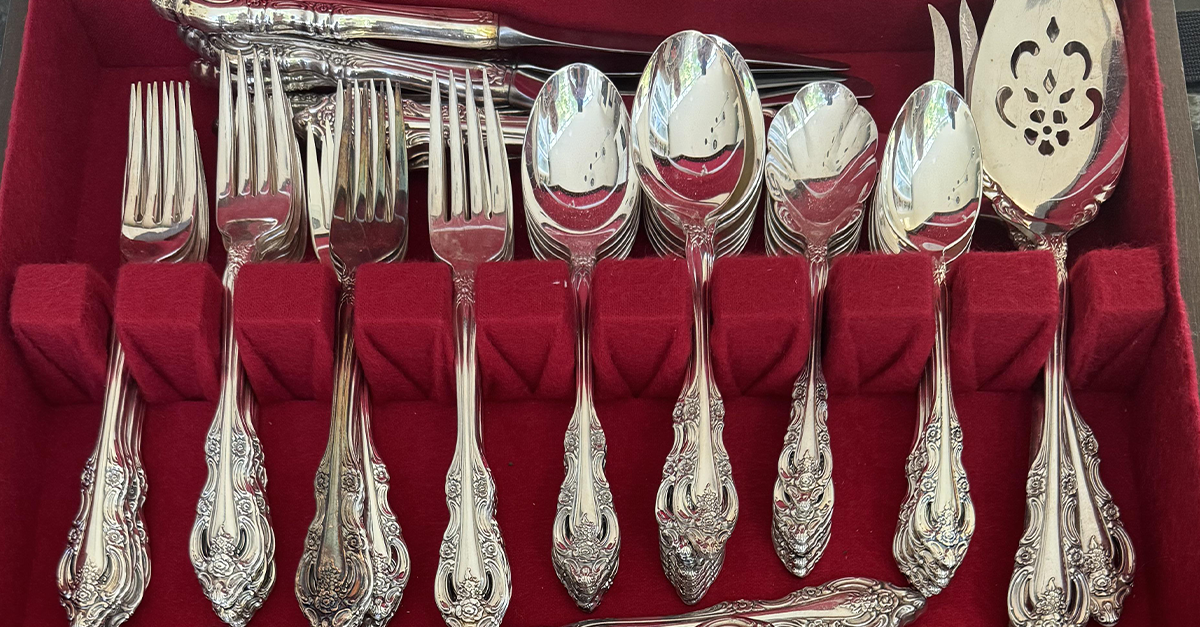
Opening the lid of a vintage flatware chest can be exciting, until you start counting forks and spoons and wonder what should be there in the first place. A complete sterling silver set carries a higher resale value, looks uniform on the table, and saves collectors from the hassle of hunting down missing pieces later.
Determining completeness isn’t complicated, but it does require a methodical approach. From understanding standard place-setting counts to verifying matching patterns and hallmarks, here’s how to confirm whether your sterling silver set is truly all there.
A full set commands a premium because buyers avoid the time and expense of sourcing individual replacements. Incomplete sets often trade for little more than scrap value per ounce, especially if the missing items are hard-to-find serving pieces.
Collectors and hosts alike appreciate the uniform look of a complete service. Even if you plan to melt the silver for its metal content, knowing the set is intact can influence decisions about resale, appraisal, or insurance.
The core of most sterling flatware is the place setting, the utensils each diner uses. Traditional American and British services differ slightly, but a typical modern place setting contains five pieces. Older or luxury patterns may expand to seven or more.
Count the following per diner, then multiply by the intended number of guests. If your set was marketed as a “service for 12,” you should find at least 60 core pieces.
Serving utensils are where many sets fall short. Because they’re larger and used less often, they’re the first to be misplaced over decades of family dinners.
Common essentials include a serving spoon, pierced serving spoon, sugar shell, butter spreader, and cold-meat fork. More specialized services may add a gravy ladle, pie server, or fish knife.
Spread the pieces on a cloth and check that the decorative pattern flows consistently from handle to tip. Even within the same manufacturer, subtle revisions can create mismatched contours.
Next, flip each utensil over. Authentic sterling will be stamped "Sterling," "925," or a maker’s hallmark such as the lion-passant in British silver. Mixed hallmarks signal replacements or later additions, which can affect value.
Manufacturers often published pattern-specific brochures listing every piece available. Download or reference one online, then mark off items you have and highlight those missing.
Finally, weigh the set on a digital scale. A sudden weight discrepancy, say, eight teaspoons weighing less than expected, may indicate that a lighter, non-sterling substitute found its way into the chest.
If your audit reveals gaps, decide whether to replace, repurpose, or sell. Replacement services and secondary markets regularly stock individual utensils from popular patterns, though rare pieces can command a premium.
Alternatively, you might choose to sell the partial set and let a future owner complete it. Knowing exactly what’s missing allows you to describe the set accurately and price it fairly.
A quick inventory, a keen eye for hallmarks, and a reliable reference checklist are usually all it takes to verify completeness. The process can be done in under an hour and may add significant value to your sterling silver.
Whether you’re planning to sell, insure, or simply set the table for a special occasion, confirming that every fork, spoon, and ladle is present ensures you get the most enjoyment, and the highest return, from your silverware.

