

MENU
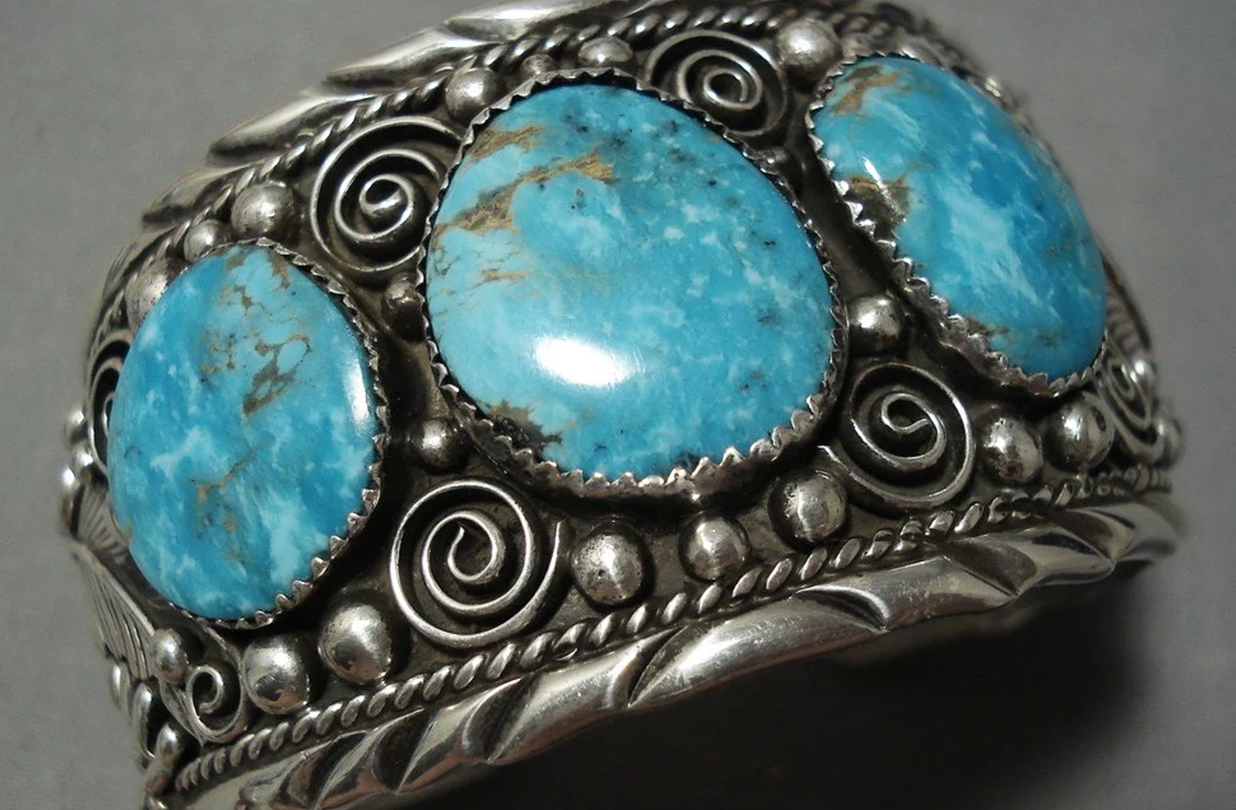
Silver and turquoise jewelry occupies a broad space in the market, ranging from everyday wearable pieces to highly collectible works. Some examples are relatively affordable, while others achieve strong prices. Determining whether a specific piece is valuable requires looking beyond appearance and focusing on materials, workmanship, and context rather than assuming value based on style alone.
The wide range in value comes from how differently silver and turquoise jewelry can be made. Turquoise itself varies greatly in quality, and silver settings can range from lightweight cast forms to heavy hand fabricated construction. Because there is no single standard, two pieces that look similar at a glance may differ significantly in worth.
The type and condition of turquoise used in a piece plays a central role in valuation. Natural turquoise that retains its original color and structure is generally more desirable than heavily treated or reconstructed material. Stones with consistent color and balanced matrix patterns tend to attract more interest, while uneven coloration or excessive treatment can reduce appeal.
Turquoise is also evaluated for stability. Softer stones that show wear or cracking may be less valuable, even if they were originally high quality.
Most silver and turquoise jewelry is made using sterling silver, but quality still varies. Heavier silver construction often reflects more labor and durability, which can increase value. Visible hand work, such as saw marks or stamped details, can signal individual craftsmanship rather than mass production.
Lighter silver settings may still be attractive, but they usually place more emphasis on design than on intrinsic material value.
How a piece is made matters as much as what it is made from. Clean stone setting, symmetry where appropriate, and thoughtful design all contribute to desirability. Poorly fitted stones or uneven construction can limit value regardless of materials.
Design preferences also change over time. Some collectors favor bold, traditional forms, while others look for more restrained or modern interpretations.
Jewelry associated with known artisans or identifiable workshops can carry higher value due to confidence in origin and quality. Signed pieces often benefit from clearer attribution, but unsigned examples are common and not automatically less valuable.
Attribution becomes especially important when jewelry is described as being from a specific cultural or regional tradition. Accurate identification matters more than labels alone.
Older silver and turquoise jewelry can be valuable, but age does not guarantee higher prices. Condition is critical. Excessive wear, replaced stones, or repairs can lower value even on early pieces.
At the same time, well preserved vintage jewelry may attract more interest due to materials or techniques that are less common today.
Demand for silver and turquoise jewelry shifts over time. Certain styles or stone types may experience periods of increased interest, while others remain steady. Pieces that combine strong materials with clear craftsmanship tend to perform more consistently regardless of trends.
Availability also affects value. Common forms are often priced lower than unusual or scarce designs.
One common assumption is that size determines worth. Large stones or heavy silver can be impressive, but without quality materials and construction, size alone does not create value. Another assumption is that turquoise automatically increases price, when in reality the type and treatment of the stone matter far more than its presence.
Evaluating silver and turquoise jewelry means looking at the whole piece rather than a single feature. Turquoise quality, silver construction, craftsmanship, condition, and attribution all interact to shape value.
Silver and turquoise jewelry can be valuable, but its worth depends on specific, observable characteristics. A careful, piece by piece assessment provides a clearer understanding than broad assumptions about the category as a whole.

