

MENU
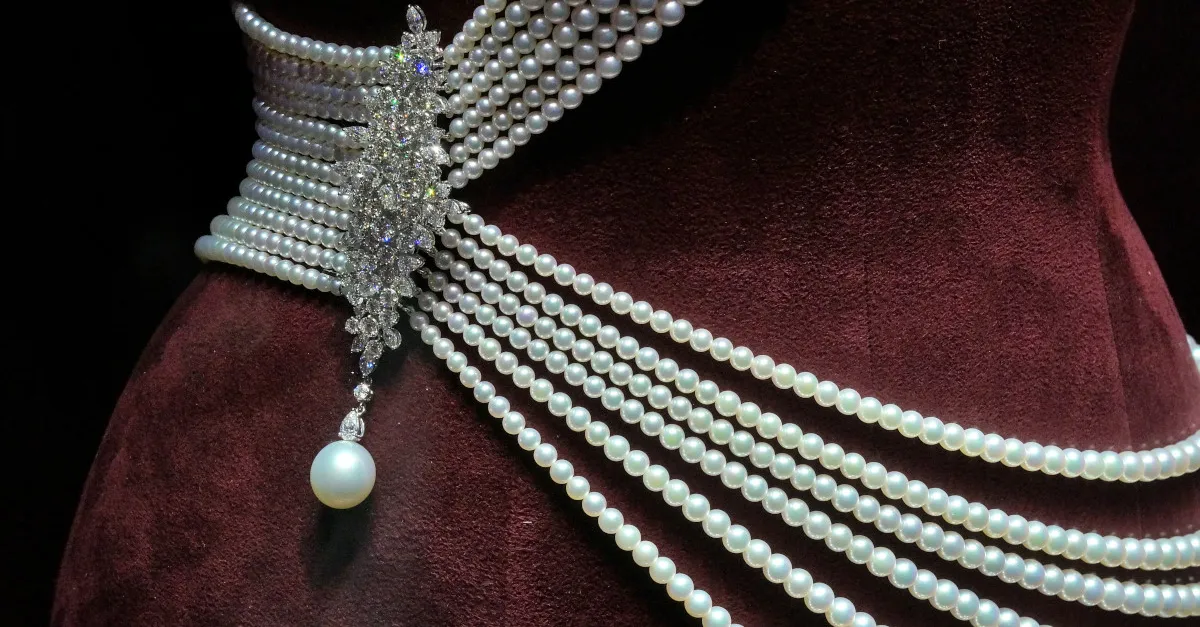
Few names in fine jewelry carry the prestige of Mikimoto. The Japanese house not only pioneered cultured pearls but also created its own straightforward grading scale that still guides buyers today.
If you’re considering Mikimoto pearls, or simply want to know why they command a premium, this guide breaks down the brand’s A–AAA system, how it differs from other scales, and what to look for when evaluating a strand or single pearl.
Introduced in the mid-20th century, Mikimoto’s proprietary scale is used exclusively for the company’s cultured Akoya pearls. Rather than multiple overlapping categories, Mikimoto keeps things simple: four core grades, A, A+, AA, and AAA, plus a rare "Hanadama" designation for gems that exceed even the AAA standard.
Because the brand controls every step from farming to retail, pearls are sorted by trained specialists who apply uniform criteria before a single necklace reaches the showcase.
The jump between each grade may look minor on paper, but it reflects noticeable differences in luster, surface perfection, and matching.
Visualize the scale as a sliding bar where AAA represents the top 5–10 % of Mikimoto’s annual harvest and A represents commercial-quality pearls that still meet the house’s strict baseline.
While the letter grade summarizes quality, graders evaluate six individual attributes before assigning that final mark.
Understanding these elements helps buyers gauge whether a particular strand’s asking price makes sense.
Above AAA sits "Hanadama," meaning “flower of the pearl” in Japanese. Pieces labeled Hanadama must pass a separate certification process by the Pearl Science Laboratory (PSL) in Tokyo.
PSL issues a laminated report confirming exceptionally high nacre thickness, orient, and fluorescence, hallmarks that translate into striking, almost iridescent depth.
Most jewelers use the more granular A–AAAA or Tahitian-style grading scales. While those systems can be helpful, they vary from seller to seller, making direct comparisons tricky.
Because Mikimoto’s standards are internally controlled, an AA necklace purchased today will match the AA necklace produced a decade from now, providing buyers with consistent, brand-backed assurance.
Even with a trusted brand, a discerning eye and a few best practices can protect your investment.
Always inspect pearls under neutral lighting and request the original Mikimoto certificate, which notes the grade, size range, and clasp metal.
Brand heritage, meticulous sorting, and limited top-grade supply combine to keep resale prices strong, particularly for AAA and Hanadama pieces.
Well-cared-for strands can appreciate over time, especially when accompanied by original packaging and paperwork, a bonus for collectors and estate planners alike.
Mikimoto’s A–AAA grading scale may appear simple, but it represents decades of expertise and an uncompromising approach to quality. By focusing on luster, surface, and uniformity, the system helps buyers quickly identify pearls that meet their aesthetic and budgetary goals.
Whether you are searching for your first strand or adding to a growing collection, understanding how Mikimoto evaluates its pearls will give you the confidence to select jewelry that shines, today and for generations to come.

