

MENU
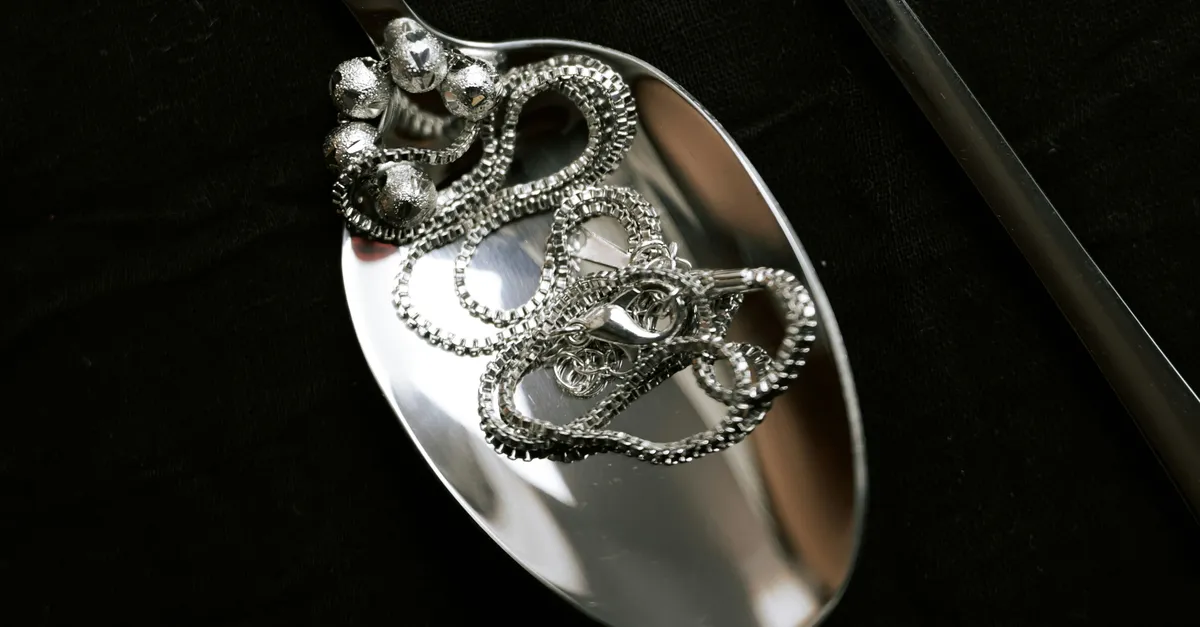
Sterling silver is loved for its luster, versatility, and intrinsic value, but not all sterling pieces are created, or valued, the same. A necklace and a dinner fork might share a "925" stamp, yet they follow different manufacturing traditions and serve very different purposes.
Knowing how sterling silver jewelry differs from flatware can help you buy, sell, or simply care for these items more confidently. Below, we break down the major distinctions in composition, design, hallmarks, and resale potential.
Sterling silver is an alloy containing 92.5% pure silver and 7.5% copper or other base metals. The addition of a harder metal gives the piece enough strength to withstand daily use while retaining silver’s bright appearance.
Whether crafted into a bracelet or a soup spoon, any item labeled "sterling," "925," or ".925" should meet this same compositional standard.
Jewelry makers favor sterling for rings, necklaces, earrings, and bracelets because it allows intricate detailing without the extreme softness of fine (99.9%) silver. Settings often hold gemstones or enamel, and surface treatments like rhodium plating reduce tarnish.
Weight is usually secondary to aesthetics. A large cuff bracelet can weigh less than a modest dinner fork because jewelers often hollow or cast pieces to achieve comfort and wearability.
Flatware, forks, spoons, serving pieces, and knives, must stand up to repeated cutting, scooping, and washing. As a result, manufacturers prioritize heft and balance, often producing solid handles and thicker gauge stems.
Patterns range from minimalist mid-century styles to ornate Victorian scrollwork. Complete services typically include multiple forks and spoons per place setting, plus specialized utensils like pastry servers or asparagus tongs.
Both categories share the 92.5% purity benchmark, yet how the alloy is formed and finished varies substantially. Jewelry pieces are usually cast or fabricated in smaller sections, then soldered. Flatware is often die-struck or forged from thicker blanks to ensure structural integrity.
Market value also diverges. Jewelry pricing leans heavily on design, brand, and gemstones, whereas flatware value is strongly influenced by weight, pattern popularity, and completeness of a set.
True sterling should carry a quality mark such as “STERLING,” “925,” “.925,” or “95%.” Jewelry will often pair the purity stamp with a designer or brand mark, think “Tiffany & Co.” or “Mexico.”
Flatware frequently includes the maker’s mark and, in older American pieces, a pattern name or patent date. British and some European utensils show full hallmark sets indicating town assay, date letter, and lion passant symbol.
Collectors hunt iconic jewelry lines, from Taxco artisan pieces to mid-century Scandinavian designs, paying premiums far above melt value. Limited editions or signed studio work can command strong auction prices.
Flatware’s resale strength hinges on famous patterns such as Reed & Barton’s ‘Francis I’ or Gorham’s ‘Chantilly.’ Large, matched sets often sell at multiples of their scrap value, whereas odd pieces might trade closer to weight.
Both jewelry and flatware tarnish over time due to the copper content in sterling. Gentle hand-washing and thorough drying prevent water spots and tarnish buildup. Avoid dishwashers for sterling flatware; harsh detergents can dull the finish.
Store jewelry in anti-tarnish pouches and flatware in felt rolls or chests. Periodic polishing with a non-abrasive cloth restores shine, but excessive polishing can soften pattern details on ornate utensils.
Sterling silver jewelry and flatware share a purity standard, yet they differ in construction methods, functional priorities, hallmarks, and the factors that drive their market prices.
Whether you’re adding to a personal collection or evaluating pieces for sale, understanding these nuances ensures you recognize quality and make informed decisions.

