

MENU
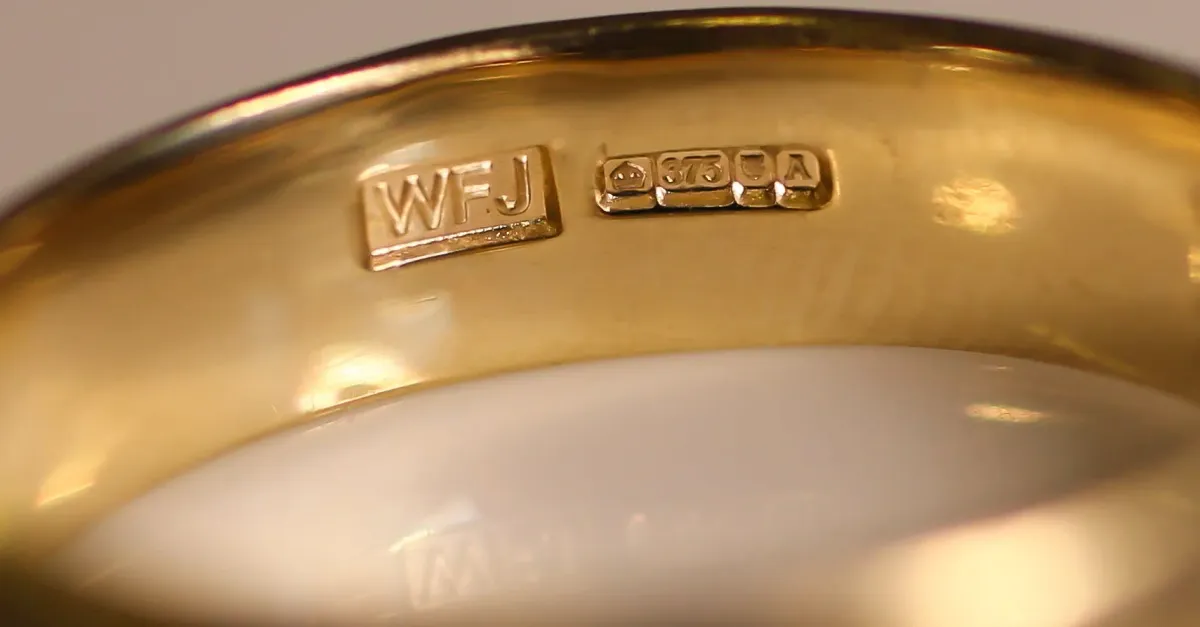
Flip over a gold ring or necklace and you might spot tiny numbers like 375, 585, or 750. These hallmarks aren’t random, they reveal the metal’s purity and help buyers, sellers, and collectors gauge value at a glance.
If you’ve just noticed a "375" mark and are wondering what it means, this guide breaks down the significance of the stamp, how 9-carat gold stacks up against other karats, and what that means for price, durability, and everyday wear.
Gold jewelry is rarely pure. To improve strength and control color, gold is alloyed with metals such as silver, copper, nickel, or zinc. Jewelers then stamp finished pieces with numbers or hallmarks indicating how much pure gold is present.
In most countries, purity is shown either in parts per thousand (e.g., 750) or by karat (e.g., 18K). These marks are set by assay offices or manufacturers and give consumers an immediate indicator of quality.
A 375 stamp means the metal is 37.5 % pure gold, equivalent to 9 karats out of a possible 24. The remaining 62.5 % is a blend of other metals chosen for hardness, color, and cost control.
Because 9-carat gold meets the legal minimum for being called "gold" in many regions, including the U.K., Australia, and parts of Europe, 375 is a standard mark you’ll find on mass-market and vintage pieces alike.
When stacked next to 14K (585) or 18K (750) items, 9K gold contains far less precious metal, which directly affects both intrinsic value and color. It appears paler than 14K yellow gold and may look slightly rosier when extra copper is added.
The lower purity, however, makes 375 gold meaningfully harder and more scratch-resistant than higher-karat counterparts, a trade-off many jewelers leverage for everyday jewelry.
Affordability is the headline benefit. Because more than half the alloy is made of base metals, a 9K ring or chain costs substantially less than an 18K equivalent of the same weight.
On the flip side, the higher proportion of alloys can trigger skin reactions in people sensitive to nickel or copper, and the resale value per gram is lower because of its reduced gold content.
Jewelers often choose 9-carat gold for items that endure frequent knocks, think charm bracelets, men’s signet rings, or kid’s jewelry. Its hardness resists bending and surface wear better than softer alloys.
It is also a staple in the U.K. wedding band market, where couples can select wider profiles without the hefty price tag associated with higher-karat gold.
While the hallmark is the quickest clue, professional appraisers verify purity with acid tests, electronic testers, or X-ray fluorescence machines. These methods confirm that the piece is indeed 37.5 % gold, not merely plated.
If the stamp is missing or illegible, a quick magnet test can eliminate obvious fakes, gold alloys are non-magnetic, but laboratory testing is the only foolproof route.
Because gold is priced by weight and purity, 9K gold carries a lower melt value than 14K or 18K. As of the current market, its scrap price is roughly 40 % of 24K’s spot price per gram, though buyers also deduct refining fees.
Designer branding, craftsmanship, and gemstone accents can override the intrinsic metal value, so a well-made 375 piece from a respected maker can still generate strong resale interest.
Clean 9-carat gold with warm soapy water and a soft brush, avoiding harsh chemicals that can react with the alloy metals. Dry thoroughly to prevent spotting.
Store pieces separately in a fabric-lined box to reduce surface scratches. An occasional professional polish will restore shine without removing excessive metal.
A 375 stamp simply indicates 9-carat gold, an alloy that balances cost, durability, and appearance. While it contains less pure gold than higher-karat options, its toughness and affordability make it a practical choice for everyday jewelry.
Whether you’re buying, selling, or valuing a 9K piece, understanding the hallmark, testing methods, and market dynamics ensures you make informed decisions about its worth and care.

